


AMELIE
AMELIE (Anchored Muscle cells for Incontinence) is an innovative collaborative research project funded by the European Union’s Horizon 2020 Framework Programme.
AMELIE is developing a regenerative therapy using a patient’s own muscle cells to repair damaged or weakened sphincter muscle.
Partnerships
Our Research
Get Involved

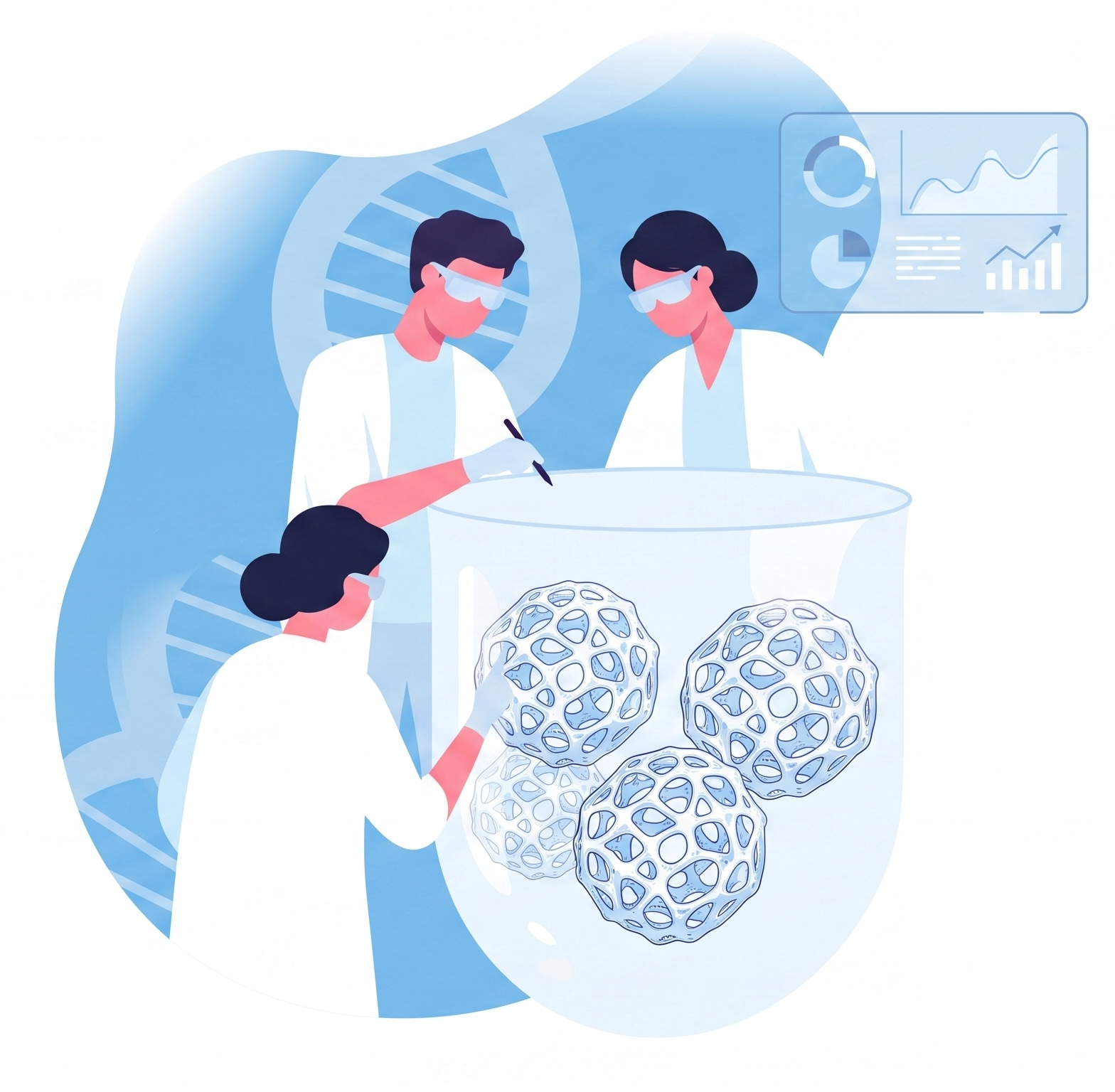
What We Do: Delivering Long-Lasting, Minimally Invasive Cell Therapy
- support cell survival
- encourage tissue regeneration
- improve the delivery of the therapy to the affected area
By harnessing the body’s natural ability to repair itself, AMELIE aims to offer a long-lasting, minimally invasive treatment for faecal incontinence.
The technology also has potential applications in other muscle injuries and conditions beyond bowel health.

AMELIE Team Guests on Bowel Research UK “Can I Butt In?” Podcast
Members of the AMELIE team were delighted to appear on the \"Can I Butt In?\" podcast by charity Bowel Research UK to discuss the exciting progress on our research. Bowel Research UK CEO Kathryn Pretzel-Shiels…

AMELIE Project Update: Early Clinical Trial Milestones Achieved
We are pleased to share an important milestone in the AMELIE project, which is developing a novel regenerative treatment for faecal incontinence. To date, four patients have been treated at The Royal London Hospital in…
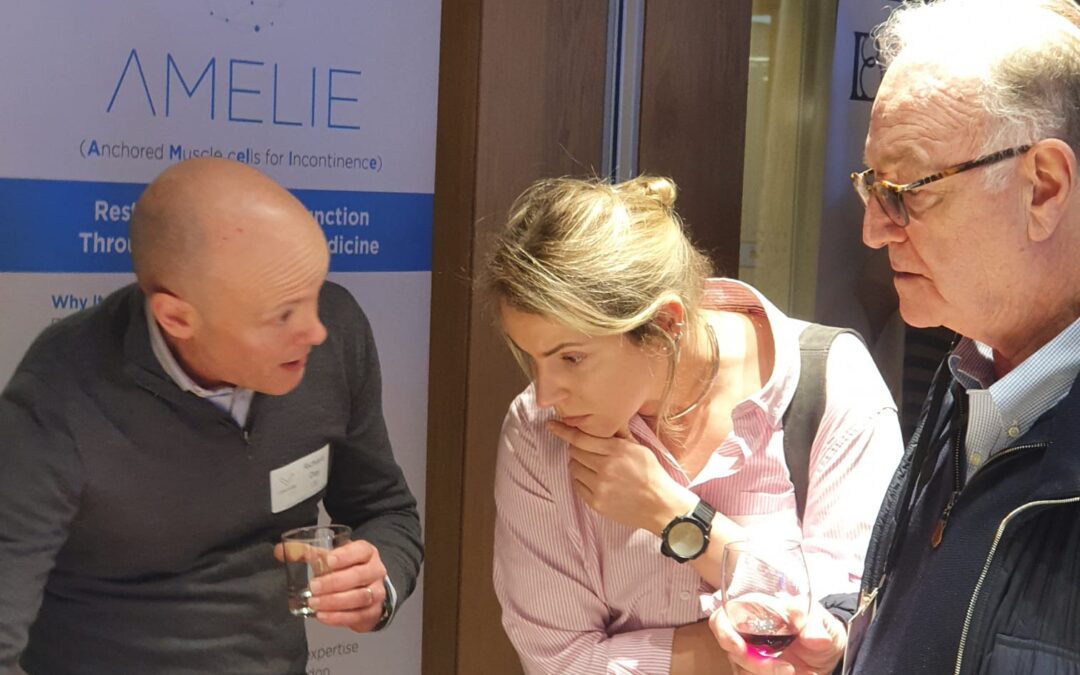
Representing the AMELIE project at the Cleveland Clinic Surgical Innovation Summit 2026
We are pleased to share that Professor Richard Day will be attending the Cleveland Clinic Surgical Innovation Summit 2026 on Wednesday 7 October 2026, in London. The Summit will bring together leading voices from healthcare,…
We Are Attending the ICS 2026 Annual Meeting in Maastricht
We are pleased to announce that Katarzyna Pelc, AMELIE Project Manager, will be attending the International Continence Society (ICS) 2026 Annual Meeting, taking place from 6–9 October 2026 in Maastricht, The Netherlands. The International Continence…
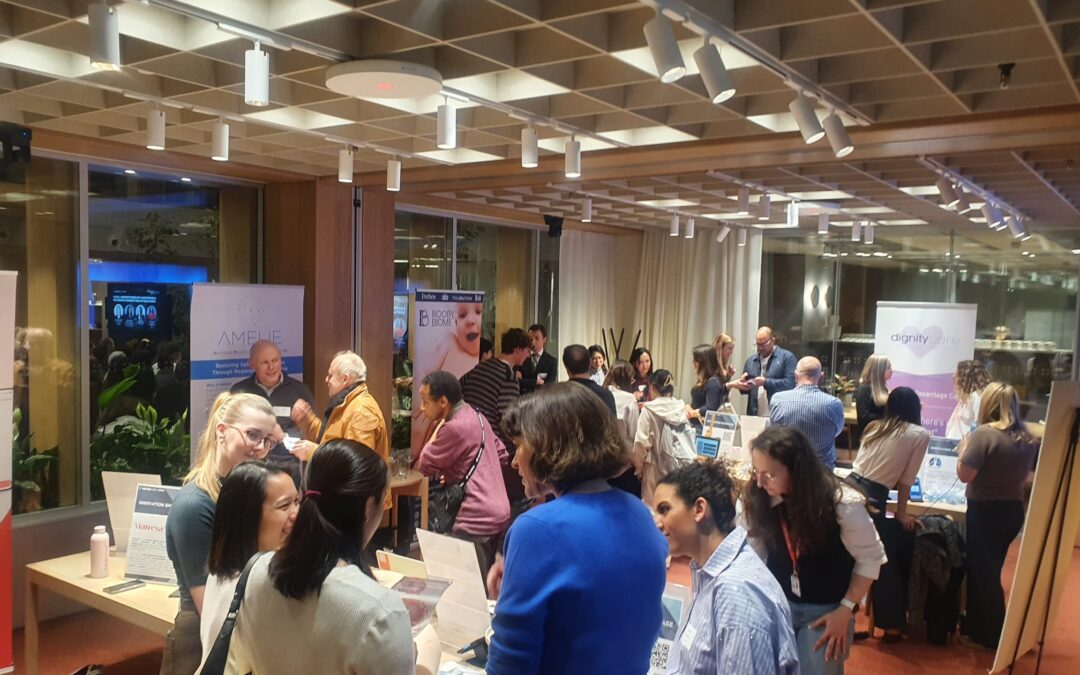
Connecting at WFIPP 2026: Advancing Continence and Pelvic Health
We are pleased to announce that Katarzyna Pelc, AMELIE Project Manager, will be attending the World Federation of Incontinence and Pelvic Problems (WFIPP) 20th anniversary global summit on pelvic health, taking place on 26 June…
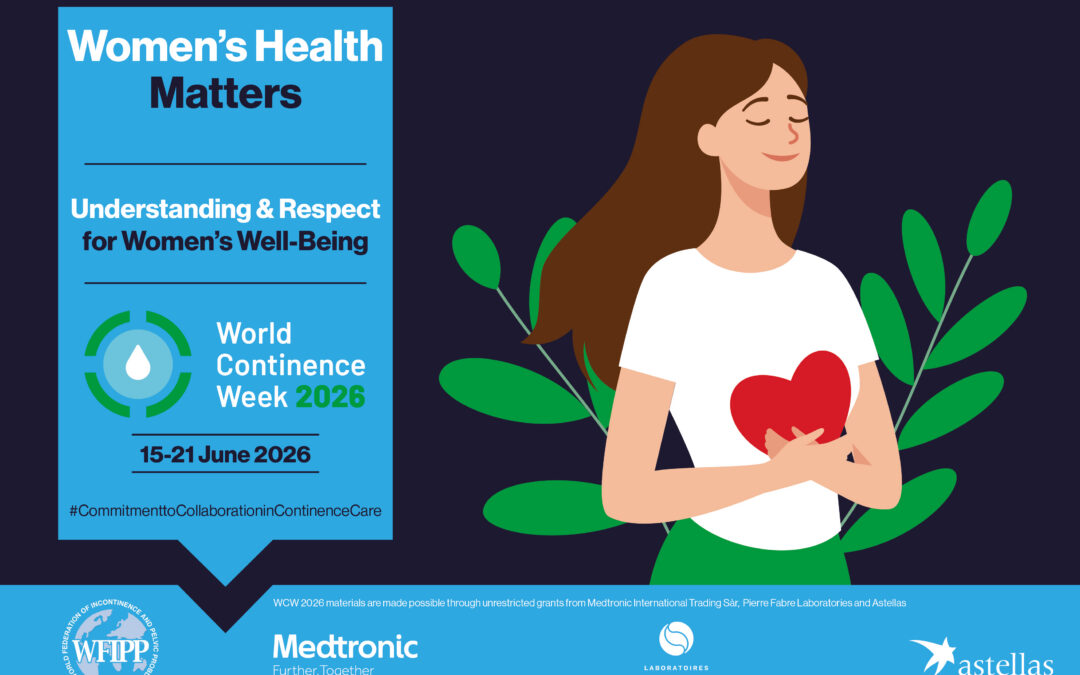
Breaking the Stigma Around Continence: World Continence Week – 15th to 21st June 2026
World Continence Week (WCW) is an annual initiative devised and managed by the World Federation of Incontinence and Pelvic Problems (WFIPP), with the endorsement and support of the International Continence Society (ICS), European Association of…
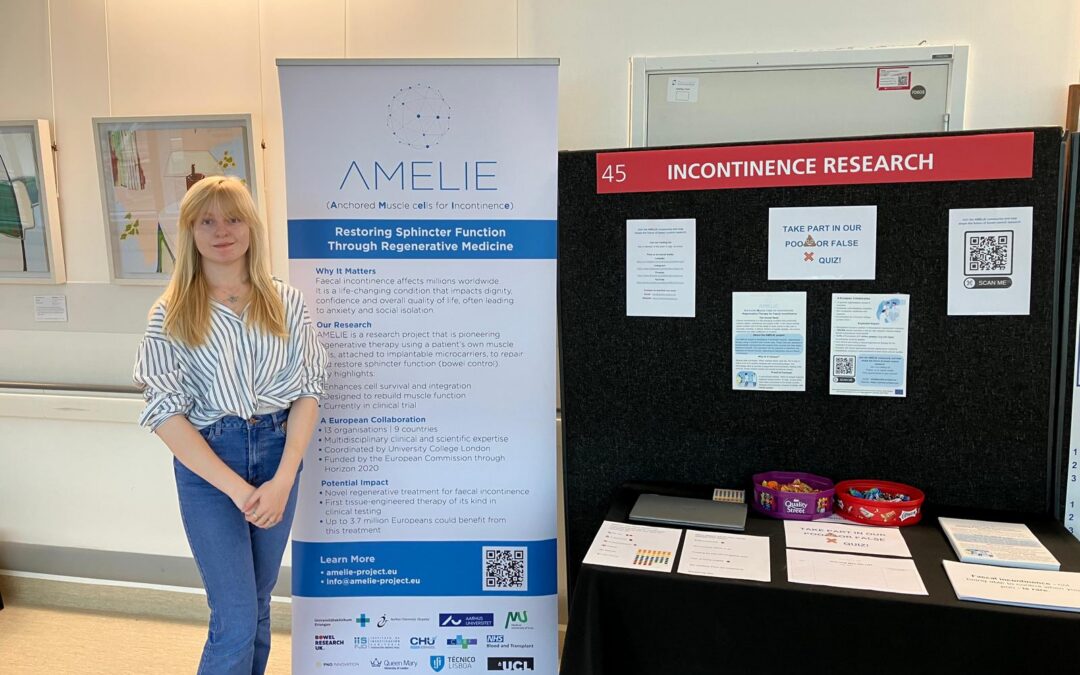
AMELIE to engage the public at UCLH Research Open Day 2026
Update: This event has been rescheduled for 8 October 2026. The AMELIE project will be showcased at the UCLH Research Open Day on Thursday 8 October 2026, an interactive event celebrating medical research and…
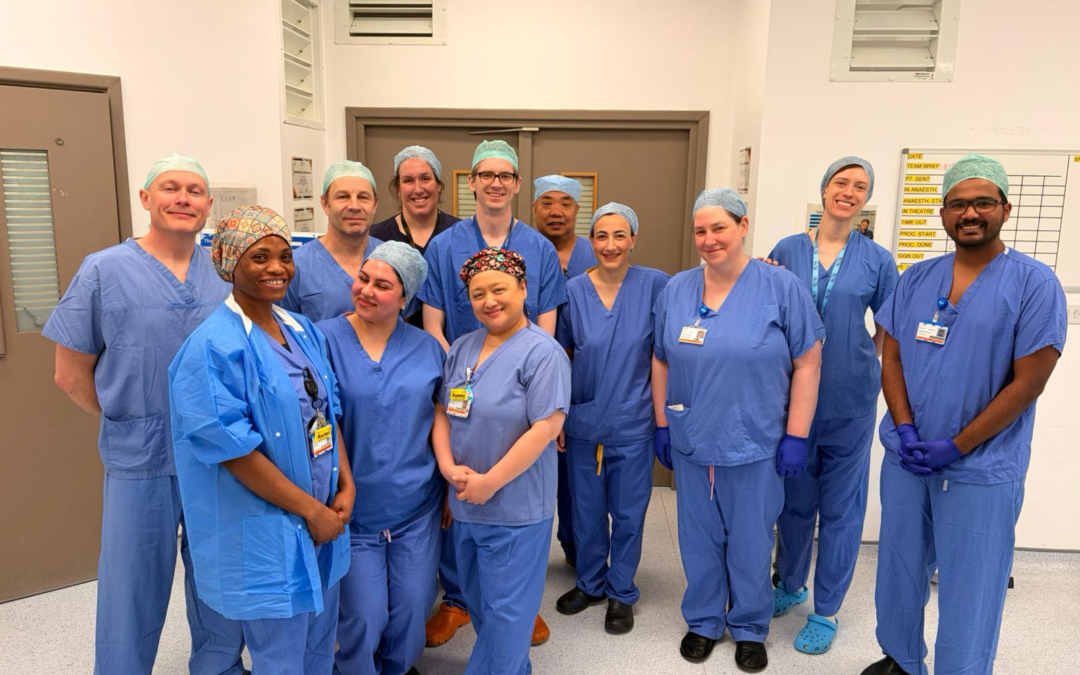
First Patient Treated in AMELIE Trial
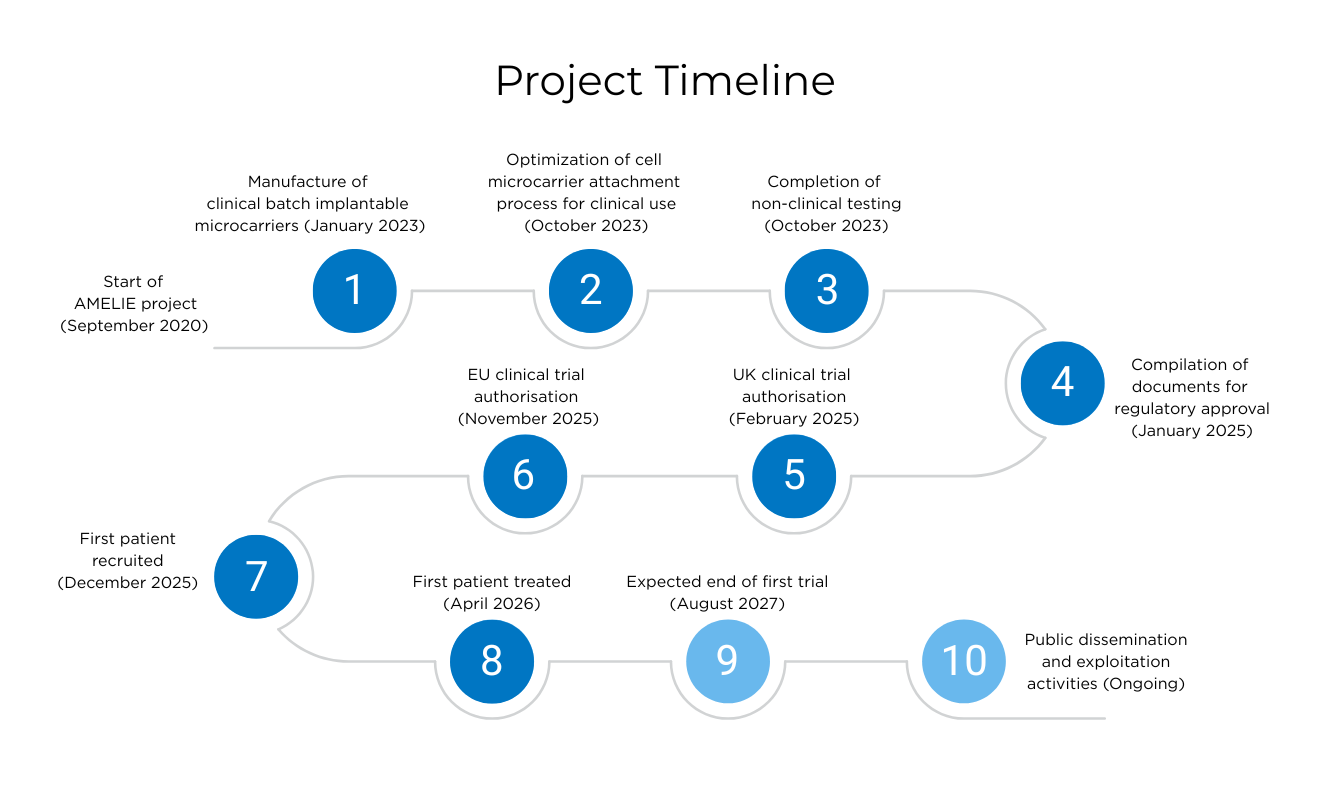
The first patient was recently treated in the AMELIE clinical trial during April 2026. The team at The Royal London Hospital implanted healthy muscle cells attached to microscopic beads in humans for the first time.…

Venture Café London’s Thursday Gathering – 26th February 2026
We\'re showcasing at Venture Café London’s Thursday Gathering, \"From Research Gaps to Breakthroughs: Women\'s Health Innovation\", on Thursday 26th February. The evening will bring together researchers, entrepreneurs, healthcare evaluators, and investors who are committed to advancing women\'s…

Getting to Know the AMELIE Team
The AMELIE YouTube channel is home to several video interviews where you can hear from members of the research team about their backgrounds and roles. We have conducted insightful interviews with Professor Richard Day, Professor…

Can cell therapy restore muscle function?
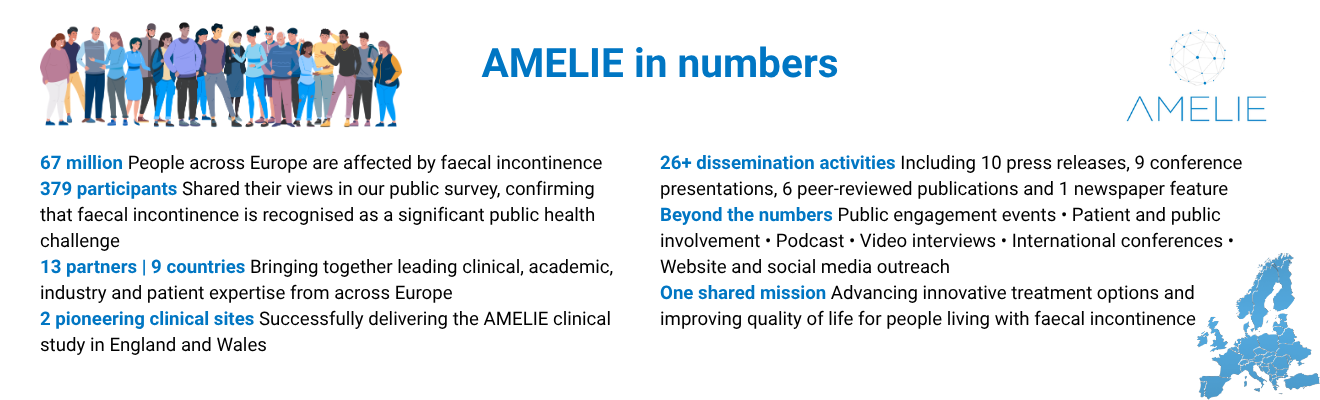
Faecal incontinence is a serious public health problem, affecting over 67 million people in Europe. AMELIE is primarily concerned with the effect of injury to the anal sphincter by childbirth, surgery or trauma. Many such patients are unsuitable for current surgical options. Our research aims to provide a new form of regenerative treatment, as explained in this short video.
Our Partners
The AMELIE consortium is made up of 13 partners from across Europe, including the United Kingdom, Portugal, Spain, France, Germany, Italy, Austria, Denmark and the Netherlands. The organisations involved include universities, hospitals, research institutes, consultancy groups and charities. The project is coordinated by University College London, with individual work packages led by different partner organisations.


Our Research
Get Involved
Stakeholder and public involvement is essential to the success of AMELIE. Public involvement is essential to the success of AMELIE. There will be opportunities to help shape the research, take part in focus groups and surveys, read materials and assist in patient recruitment to clinical trials.

Ready to get started?
Get in touch, or read up on our latest news.